Russellville Historical Marker — Honoring Major William Russell
Major William Russell (1760–1825)
Frontier Leader, War Hero, and Pioneer of Russellville
Early Life and Genealogical Foundations
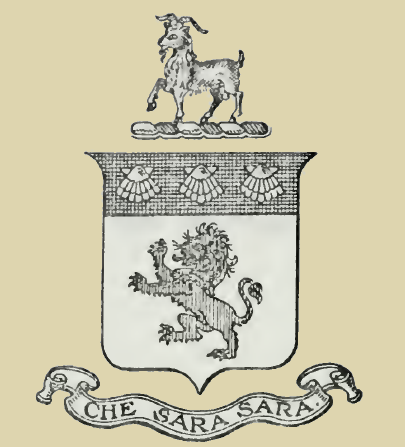
William Russell was born in 1760 into a lineage deeply rooted in the Scots-Irish frontier tradition. His father, John Russell, was a settler of Ulster Scots descent who migrated to Virginia during the mid-18th century, part of a broader wave of Presbyterian families seeking religious autonomy and agrarian opportunity in the American colonies. His mother, Henrietta “Dolly” Burleson, descended from the Burleson family—an influential kinship network with ties to both Virginia and the emerging settlements of North Carolina. The Burlesons were known for their civic engagement and military service, and their legacy would echo through the southern frontier for generations.
Raised amid the rugged terrain and volatile politics of colonial Virginia, young William Russell was shaped by the exigencies of frontier life. The borderlands of the Appalachians demanded not only physical endurance but also tactical acumen, diplomacy with Native nations, and a deep familiarity with the land. These formative experiences cultivated in Russell a capacity for leadership, survival, and strategic thinking—qualities that would later define his military and civic contributions.
Military Service and Frontier Campaigns
Russell’s martial career unfolded during a period of intense territorial contestation and national expansion. By the early 19th century, the United States was embroiled in a series of conflicts that blurred the lines between international war, indigenous resistance, and settler militancy. Russell volunteered for service during the War of 1812, a conflict that extended into the southern frontier as the Creek War (1813–1814), a pivotal theater in the struggle for control over the southeastern interior.
The Peoria Campaign (1812): Before the Creek War formally erupted, Russell led a daring expedition through the Indiana Territory in what became known as the Peoria War. Commanding a unit of mounted rangers, he traversed approximately 500 miles of contested terrain in a month-long campaign aimed at neutralizing hostile Native settlements. The operation resulted in the destruction of at least five village bases and was notable for its tactical efficiency—no American casualties were reported. This campaign exemplified the emerging doctrine of mobile frontier warfare, blending reconnaissance, rapid movement, and localized engagement.
The Battle of Horseshoe Bend (March 27, 1814): Russell’s most consequential military engagement occurred during the Battle of Horseshoe Bend, where he served as a Major commanding a battalion of volunteer mounted gunmen. This battle marked the climax of the Creek War, as General Andrew Jackson’s forces confronted the Red Stick faction of the Creek Nation in a fortified bend of the Tallapoosa River. Russell’s battalion played a critical role in breaching the Red Stick defenses, contributing to a decisive American victory. The aftermath of the battle led to the Treaty of Fort Jackson and the cession of over 20 million acres of Creek land—territory that would become central to the expansion of Alabama and the Deep South.
Postbellum Settlement and Civic Legacy
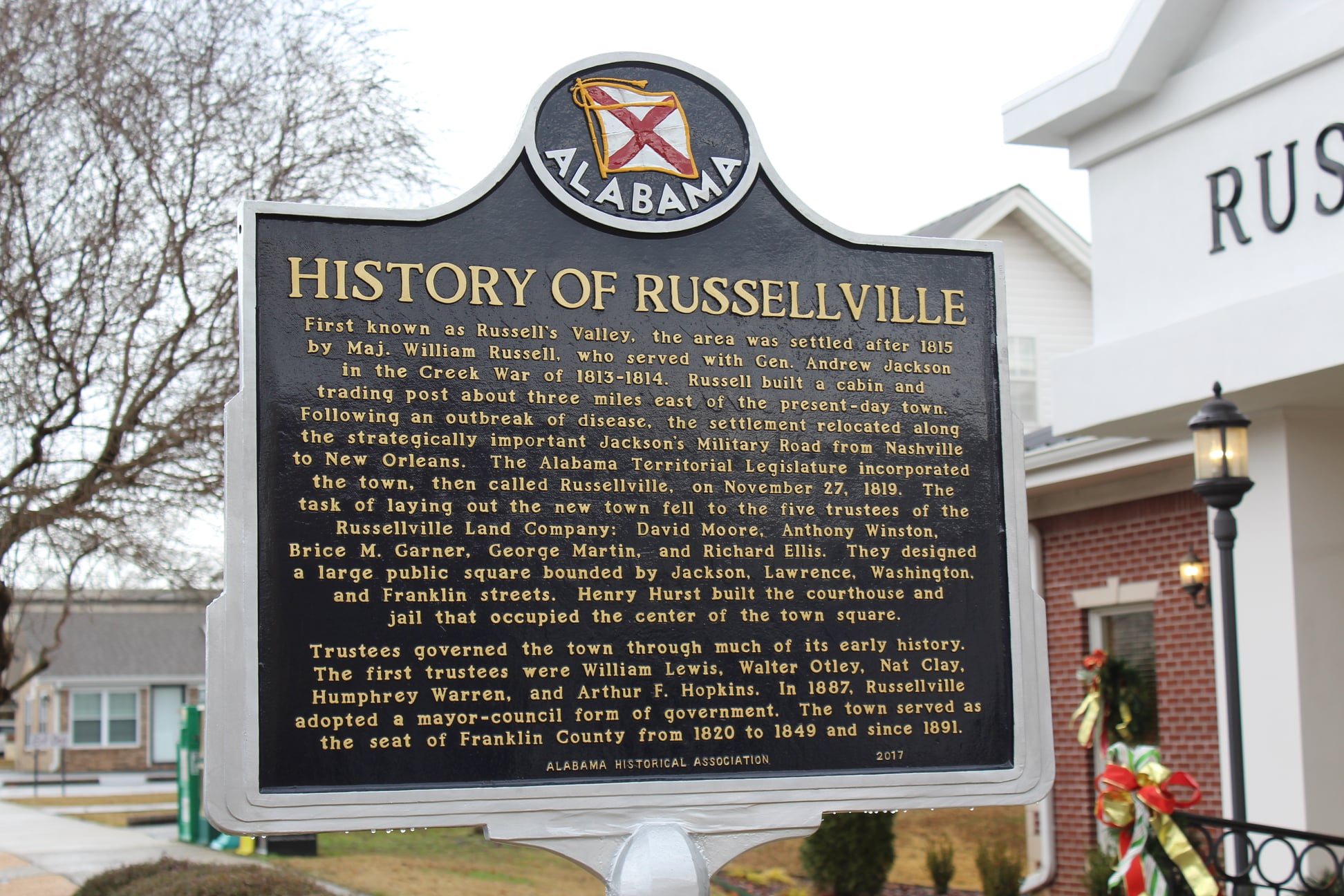
Following his military service, Russell transitioned from soldier to settler, embodying the archetype of the veteran pioneer. In 1815, while serving as chief scout under General Jackson, Russell surveyed the lands of northwestern Alabama and identified the fertile valleys of Franklin County as prime for settlement. His reconnaissance laid the groundwork for infrastructural development along the Jackson Military Road, a strategic artery connecting Nashville to New Orleans.
Upon the road’s completion, Russell returned to the region and established one of its earliest pioneer homesteads approximately two and a half miles east of what would become Russellville. The area, initially known as Russell’s Valley, quickly attracted settlers and was formally incorporated as Russellville in 1819. His cabin, symbolic of postwar transformation and frontier resilience, became a nucleus for civic life and regional identity.
Enduring Legacy and Commemoration
Major William Russell’s legacy is etched into both the military and civic landscapes of early Alabama. His leadership during the Creek War, particularly at Horseshoe Bend, positioned him as a key figure in the United States’ southern expansion. Equally significant was his role in transforming contested frontier into settled community—an act of nation-building that fused martial valor with agrarian vision.
Russellville, Alabama, stands as a living testament to his contributions. The city’s name preserves his memory, while its founding narrative reflects the broader story of postwar settlement, indigenous displacement, and the forging of American identity in the southern interior. Russell’s life exemplifies the complex interplay of ancestry, warfare, and civic enterprise that defined the early republic, and his story remains integral to the symbolic and historical fabric of the region.