The Angel of Hadley
A Legend of Shadows, Swords, and Sanctuary
⛪ A Town Under Siege
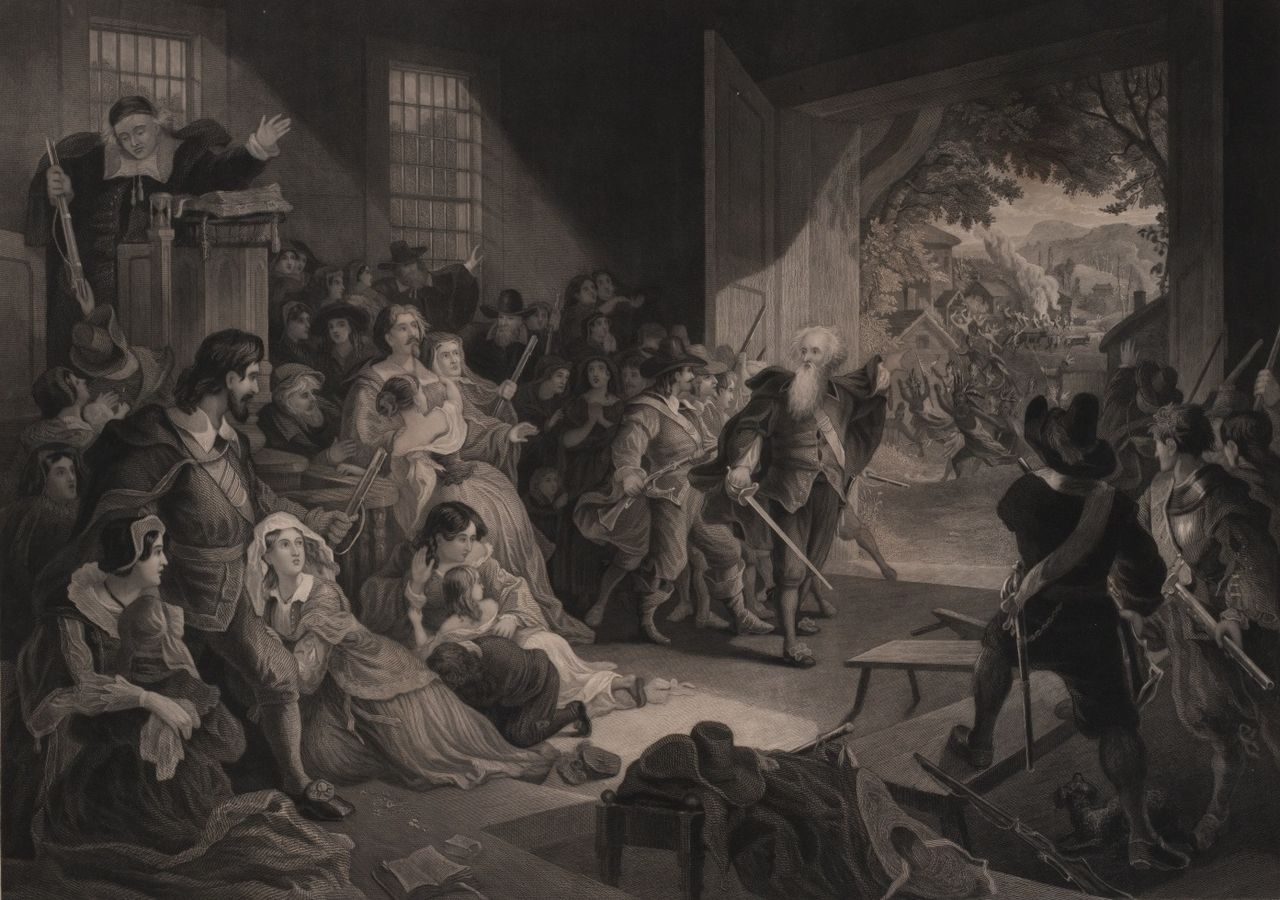
In the late 1670s, the frontier town of Hadley, Massachusetts stood on edge. The region was embroiled in King Philip’s War, a brutal conflict between English colonists and Native tribes. On a day of worship—possibly during a Sabbath service—the town was suddenly attacked. Panic erupted. The townspeople, unarmed and unprepared, fled in confusion.
Then, as if summoned by providence, a mysterious figure appeared. Clad in a long cloak, white-haired and commanding, he took charge. With military precision, he rallied the townsmen, organized a defense, and repelled the attackers. When the danger passed, he vanished—leaving behind awe, whispers, and a legend.
🕊️ The Angel Revealed
Locals called him the Angel of Hadley. But he was no celestial being. He was William Goffe, a former English general and one of the regicides—the judges who signed the death warrant of King Charles I in 1649. After the monarchy was restored under Charles II, Goffe and his father-in-law Edward Whalley fled England, branded as traitors.
They found refuge in New England, moving from town to town under aliases. By the 1660s, they were hidden in Hadley under the protection of Reverend John Russell, a man of deep conviction and quiet defiance. For years, Goffe lived in Russell’s home, unseen by the public, sustained by secrecy and faith.
📜 Legacy and Symbolism
The Angel of Hadley story became a symbol of divine justice and political exile. Goffe’s sudden emergence—his sword raised in defense of a town that did not know him—embodied redemption through resistance. Hadley itself became a sanctuary not just for a man, but for a principle: that conscience may defy kings, and that legacy lives in the shadows we protect.
Reverend Russell’s role was equally profound. By sheltering Goffe, he risked his own life and reputation. His parsonage became a hidden chamber of history, where the fate of empires brushed against the quiet rhythms of colonial life.
🔍 Historical Echoes
Historians debate the literal truth of the Angel of Hadley event. No contemporary records confirm the battle or Goffe’s appearance. The story first surfaced in 18th-century accounts, notably in Thomas Hutchinson’s History of Massachusetts Bay. Later writers, including James Kendall Hosmer, romanticized the tale, embedding it in American folklore.
Yet the broader truth remains: Goffe and Whalley did hide in New England. Their presence in Hadley is well documented. The legend, whether literal or symbolic, reflects the tension between monarchy and conscience, exile and belonging, secrecy and salvation.
🪦 Burial and Memory
Goffe’s final fate is uncertain. Some say he died in Hadley, buried in an unmarked grave near the parsonage. Others suggest he moved again, deeper into obscurity. Whalley may have died in Hadley as well, though records are sparse. Reverend Russell’s legacy endures—his descendants carried the name and spirit into future generations, including the Russell family of Massachusetts and New England.
Today, Hadley’s quiet streets and ancient burial grounds whisper of this hidden chapter. The Angel of Hadley remains a symbol of courage, conviction, and the sacred duty to shelter those whom history casts into shadow.