The Russell family's ascent in 17th-century Scotland reflects a strategic alignment with both ecclesiastical authority and noble estate management—two pillars of influence in post-Reformation Scottish society. Patrick Russell’s marriage to Isobel Sharp, sister of Archbishop James Sharp, embedded the family within the upper echelons of the Scottish Episcopal Church during a volatile period marked by religious realignment and political factionalism. Archbishop Sharp, a controversial figure due to his role in the Restoration of episcopacy under Charles II, wielded considerable power as Primate of Scotland and Chancellor of the University of St Andrews. Through this marital connection, the Russells gained proximity to theological discourse, patronage networks, and the contested terrain of church governance.
James Russell, Patrick’s brother, held the office of Chamberlain to the Earl of Moray—a role that entailed oversight of land revenues, tenant relations, and estate logistics for James Stewart, 4th Earl of Moray. As Chamberlain, Russell operated within the administrative core of Scottish nobility, executing duties that required legal literacy, fiscal acumen, and political discretion. The Moray estates, centered around Darnaway Castle and extending across Elginshire, were among the most prominent in northern Scotland, and their management placed Russell in direct contact with regional power structures and Crown intermediaries.
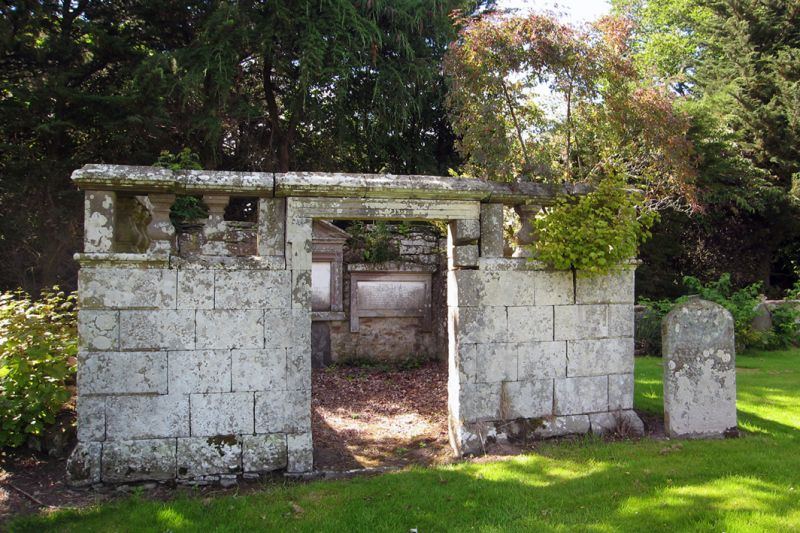
The gravestone inscription at Earlsmill serves not merely as a memorial but as a material artifact of status, inscribing administrative legacy into the landscape of local memory. Such inscriptions often functioned as public affirmations of service, lineage, and social standing, reinforcing the family's embeddedness within both noble and ecclesiastical spheres.
“James Russell, Chamberlaine to the Earle of Moray, lies here with his wife Elizabeth Spence…” — Gravestone at Earlsmill
The Murder of Archbishop Sharp
The assassination of Archbishop James Sharp on May 3, 1679 stands as one of the most incendiary episodes in Scotland’s Covenanting era—a moment where theological dissent, political grievance, and personal vendetta converged in violent resolution. Sharp, once a moderate Presbyterian, had become the emblem of royalist episcopacy following his elevation to Archbishop of St Andrews and his role in suppressing Covenanter resistance. His alignment with Charles II’s restoration policies, including the enforcement of bishops and the persecution of field preachers, rendered him a lightning rod for radical Presbyterian ire.
Among the group of Covenanters who ambushed Sharp near Magus Muir was James Russell, brother to Patrick Russell. This familial connection transforms the event from a purely ideological act into one with intimate resonance—suggesting that the Russell family itself was divided across lines of ecclesiastical loyalty and political conscience. James Russell’s participation, documented in both contemporary accounts and later Presbyterian martyr narratives, reflects the depth of conviction among militant Covenanters who viewed assassination not as criminality but as divine justice against tyranny.
Speculation surrounding noble complicity—particularly among families like the Spottiswoodes, who had longstanding ties to both ecclesiastical and royalist circles—adds another layer of intrigue. While direct evidence remains elusive, the social networks and estate logistics required to execute such a targeted ambush imply access to intelligence, safe houses, and sympathetic intermediaries. The act was not random; it was choreographed, ideologically framed, and executed by men who understood both the theological stakes and the political consequences.
Sharp’s murder catalyzed a wave of repression, culminating in the Battle of Drumclog and the brutal aftermath of Bothwell Bridge. Yet within Presbyterian memory, the event was reframed as martyrdom inverted—a righteous blow against apostasy. For the Russell lineage, this moment marks a rupture: a point where kinship intersects with rebellion, and where legacy is shaped not only by service and marriage, but by blood and belief.
“They saw Sharp’s passing coach as a divine opportunity to strike against tyranny.” — Historical accounts of Magus Muir
Russell–Spotswood Connection
The intersection of the Russell and Spottiswoode families offers a compelling lens through which to examine the entanglement of ecclesiastical authority, noble administration, and transatlantic legacy. John Spottiswoode, Archbishop of St Andrews from 1615 to 1639, played a pivotal role in shaping the Scottish Church’s alignment with royalist episcopacy during the reigns of James VI and Charles I. His tenure marked a period of theological centralization and political tension, laying the groundwork for the ecclesiastical conflicts that would culminate in the Covenanting wars. As a senior churchman and royal advisor, Spottiswoode’s influence extended beyond pulpit and presbytery into the realm of statecraft and dynastic negotiation.
The Russell family, operating within similar spheres of ecclesiastical and administrative power, appears in proximity to the Spottiswoodes both geographically and institutionally. Patrick Russell’s marriage into the Sharp family—closely aligned with Spottiswoode’s episcopal legacy—suggests a continuity of clerical-political alliances. Meanwhile, James Russell’s role as Chamberlain to the Earl of Moray placed him within the same noble circuits that had long been shaped by Spottiswoode patronage. These overlapping roles imply not only shared access to elite networks but also potential ideological tensions, particularly as the Covenanting movement gained momentum.
Alexander Spotswood, a descendant of Archbishop Spottiswoode, would later serve as Lieutenant Governor of Virginia (1710–1722), exporting the family’s administrative ethos to the colonial frontier. His governance reflected the same blend of military discipline, Anglican orthodoxy, and territorial ambition that characterized his forebears. The Russell–Spottiswoode connection, therefore, spans not only ecclesiastical lineage but also the evolution of British imperial administration.
Speculation regarding Spottiswoode complicity in the assassination of Archbishop Sharp remains circumstantial, yet symbolically potent. The convergence of familial ties, ideological divergence, and administrative access creates a matrix in which conspiracy theories naturally emerge. Whether or not the Spotswoods were directly involved, their historical proximity to both the victim and the perpetrators invites interpretive inquiry. In the context of legacy mapping, this connection underscores how genealogical threads can illuminate not just descent, but dissent—tracing the fault lines where loyalty, belief, and ambition collide.
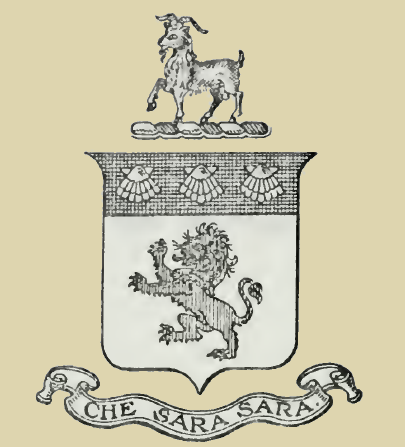
Russell Ancient Crest
Russell Ownership of Deer Abbey
Russell Ownership of Deer Abbey
Legacy, Land, and the Sacred Manuscript
Land of the Book
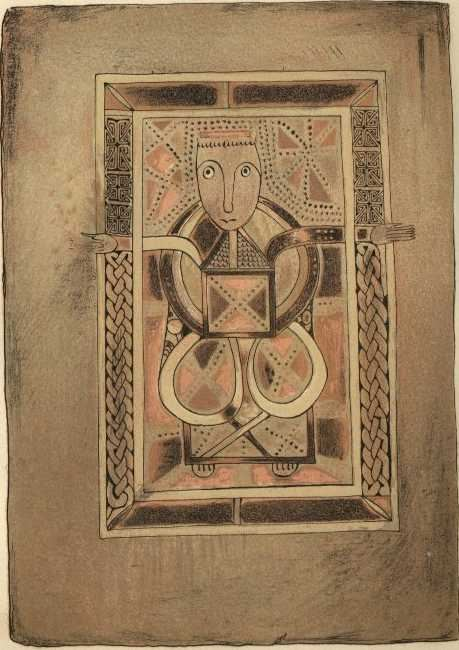
The Book of Deer, a 10th-century illuminated manuscript containing the earliest known Gaelic writing in Scotland, was discovered buried in the soil of Aberdeenshire—a region long held under the stewardship of the Russell family. This sacred text, blending Christian devotion with Celtic tradition, lay hidden for centuries on land once governed by Russell lineage, whose ancestral ties to the region stretch deep into the medieval fabric of Scotland.
Stewards of the Land
The Russell family, known for their military service and civic leadership across the British Isles and early America, held estates in Aberdeenshire during the period when the Book of Deer was rediscovered. Their stewardship of the land was not merely administrative—it was symbolic. The soil they preserved became the vessel for one of the most spiritually resonant artifacts of Gaelic Christianity. Whether by providence or preservation, the Russell name became entwined with the manuscript’s survival.
Legacy and Revival
Today, the Book of Deer stands as a testament to the enduring power of language, faith, and land. The Russell family's historical connection to the site of its discovery adds a layer of ancestral resonance to its revival. As scholars and descendants trace the manuscript’s journey, they also honor the quiet guardianship of those who unknowingly sheltered it—making the Russell legacy not just one of leadership, but of preservation.