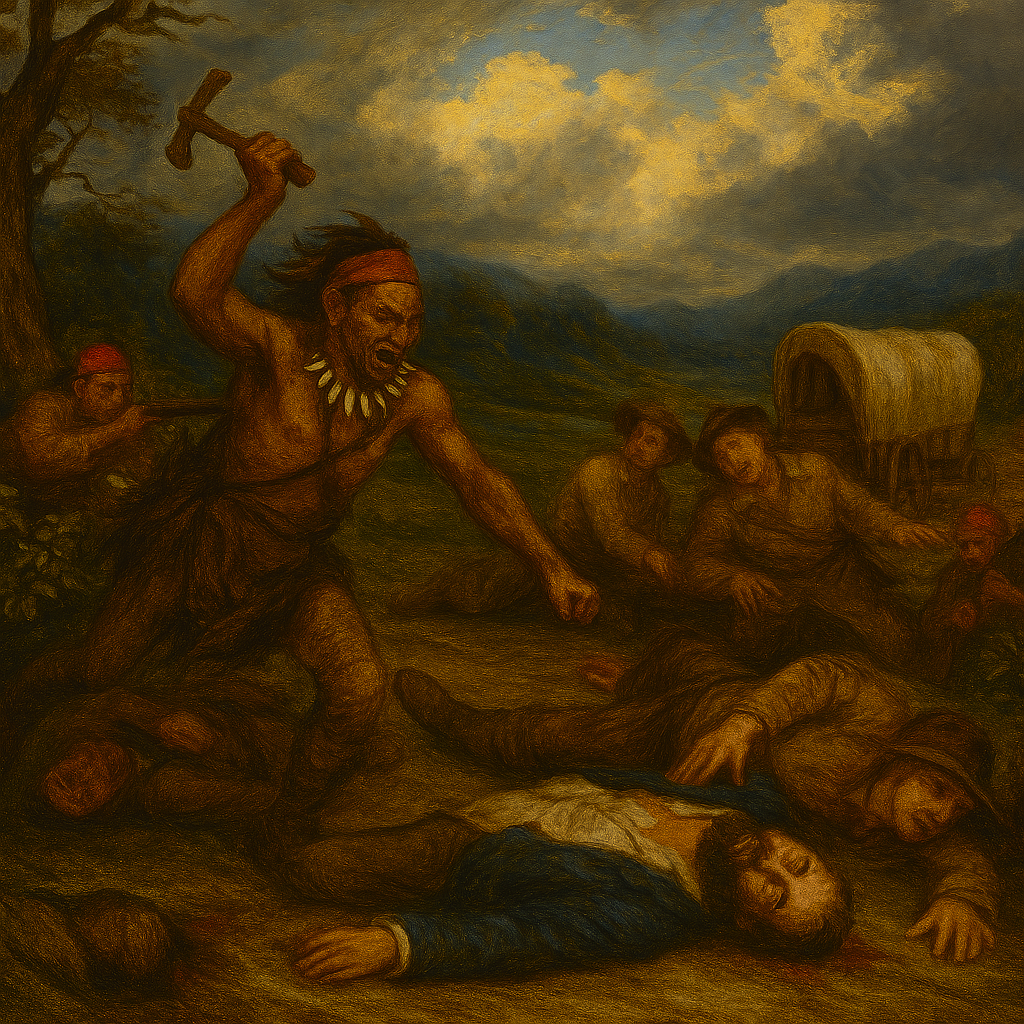
In the autumn of 1773, the rugged wilderness of Powell Valley bore witness to a tragedy that would echo through generations. As Daniel Boone led families westward toward Kentucky, a small advance party — including his son James Boone and Henry Russell, son of Colonel William Russell — became separated from the main group. Somewhere near the springs of Wallen’s Creek, they lost the trail and camped for the night. By dawn, they were ambushed and brutally slain by native warriors defending their ancestral lands.
This massacre, etched into the soil of southwestern Virginia, marked more than a violent interruption of migration. It symbolized the fragility of kinship, the peril of expansion, and the cost of frontier ambition. For the Russell family and their Beverley Manor kin, it became a sacred wound — a story passed down with reverence, sorrow, and pride.
Today, the springs still flow, and the ridges still rise. Local tradition preserves the memory near Duffield, Stickleyville, and Fannon’s Spring — places where the trail forked, and fate was sealed. This page is a tribute to those lost, a map of memory, and a call to honor the legacy they left behind.
On Oct. 8, James Boone, Henry Russell, the Mendenhall brothers, Isaac Crabtree, and two enslaved men set out to catch up with Daniel Boone. They lost the trail and camped near Wallen’s Creek, three miles east of Daniel’s camp. At dawn on Oct. 10, they were ambushed and killed by native warriors.
Local tradition places the massacre near springs along Wallen’s Creek, especially
Fannon’s Spring.
The party likely camped there before ascending Wallen’s Ridge.