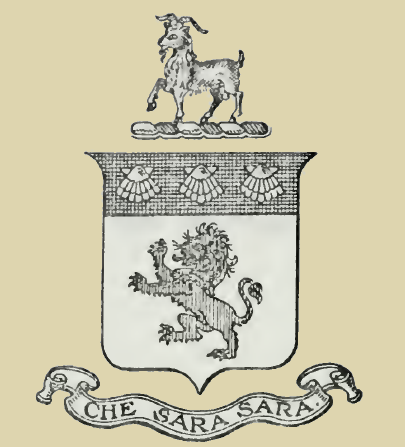
Beverley Manor – Augusta County, Virginia
Exploring the history, settlement, and families of the Beverley Patent that shaped the early Shenandoah Valley.
Interactive Map of Beverley Manor
The original map PDF is embedded below. Use the controls to scroll and zoom in/out.
Historical Background
In 1736, William Beverley acquired a vast land grant of nearly 120,000 acres known as Beverley Manor. This marked one of the earliest large-scale settlements in the Shenandoah Valley. Scots-Irish families migrating from Pennsylvania and Ulster established farms and communities, shaping the cultural foundation of Augusta County. Staunton, originally Beverley’s Mill Place, became the county seat and a hub of frontier governance.
Notable Families of Beverley Manor
The Beverleys
The Beverley family held positions of prominence in colonial Virginia and had English roots of distinction. William Beverley himself served as a member of the House of Burgesses and as a Crown Councilor. His family traced ties back to English landed gentry with connections to the Beverley baronets of Yorkshire.
The Russells
The Russell family had significant standing in the British Isles, most prominently the Dukes of Bedford in England. John Russell, 1st Earl of Bedford, was a close advisor to King Henry VIII. Descendant lines carried the Russell name into Scotland and Ireland, with landowning branches migrating to America, including Augusta County.
The Campbells
The Campbells were one of the most powerful Highland clans in Scotland. The head of Clan Campbell held the title Duke of Argyll, and various Campbells served as members of the Scottish Parliament, military officers, and influential landholders. Their influence extended across Argyllshire and beyond before branches settled in Ulster and later America.
The Stewarts
The Stewarts were the royal house of Scotland, producing monarchs who reigned from Robert II in 1371 to James VI, who also became James I of England in 1603. Many cadet branches of the Stewart family held titles as earls, lords, and barons across Scotland. Members of these branches migrated to Ulster and the colonies, including Augusta County.
The McDonalds
The McDonalds (MacDonalds) were the Lords of the Isles, one of the most powerful dynastic families in medieval Scotland. Chiefs of Clan Donald claimed descent from Somerled, a 12th-century Norse-Gaelic king. Their power rivaled that of the Scottish crown, and branches of the family later settled in Ulster during the Plantation period, eventually moving to Virginia.
The Hamiltons
The Hamilton family rose to prominence in Scotland during the 15th century. The head of the family was created Earl of Arran in 1503, and later Dukes of Hamilton held one of the highest-ranking noble titles in Scotland. The Hamiltons were closely tied to the Scottish monarchy, with James Hamilton, 2nd Earl of Arran, serving as Regent of Scotland. Ulster Hamiltons provided a stream of emigrants to Augusta County.